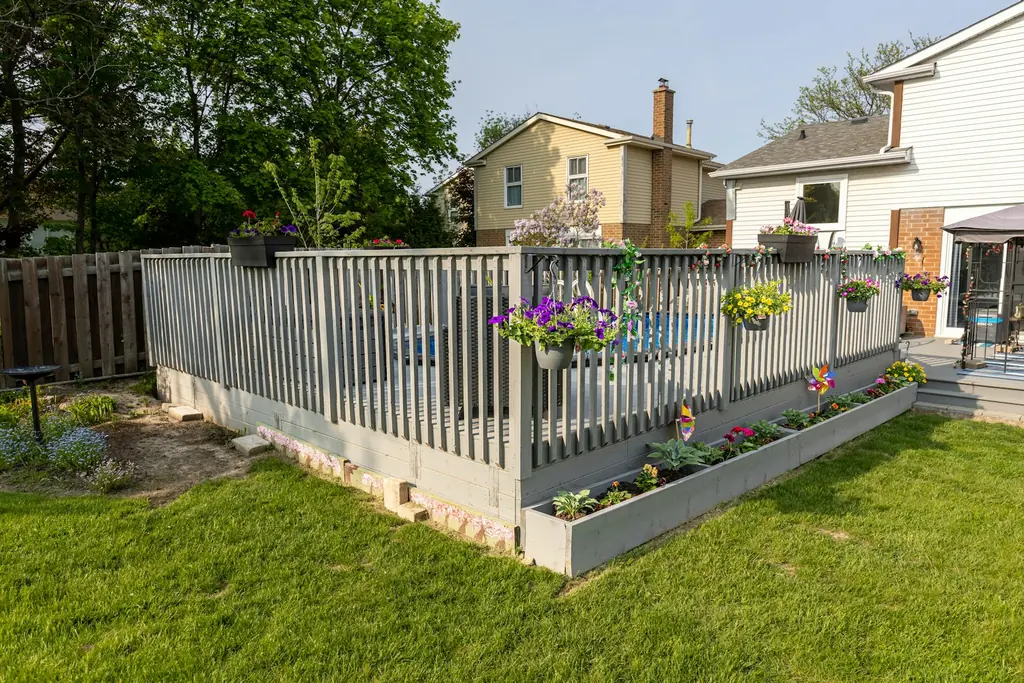
Fence Installation in Denver, CO
Planning a new fence or replacing an old one in Denver? Tell us about the job and a local fence company will call you back with a quote.
Get a fence quote in Denver
Send the details and a local fence company will call you back.
We share your name, phone and request only with the fence company we connect you to. Privacy.
How tall a fence can be in Denver
Outside industrial areas, Denver allows a fence up to 4 feet tall in the front yard and up to 6 feet in the backyard. Taller fences may be allowed in certain situations. (City and County of Denver, Fences and Walls, checked October 2026)
Under the Denver Zoning Code, a fence or wall forward of at least 75% of the total width of the primary street-facing facades of all primary structures is limited to 4 feet. The Zoning Administrator may permit a fence up to 2 feet over the maximum height if it meets all of the code's review criteria, including that the fence is necessary to provide security, privacy, or protection from traffic impacts such as noise or lights. (Denver Zoning Code, Sec. 10.5.5.1.C, checked October 2026)
Sight triangles are areas at the corners where streets, driveways or alleys meet, where fence and wall height may be limited to keep sight lines clear. Any fence or wall within a sight triangle has to be approved by Denver's Department of Transportation and Infrastructure (DOTI). (Denver Zoning Code, Sec. 10.5.5.1, checked October 2026)
Permits in Denver
In Denver, every fence over four feet tall needs a zoning permit. Post-hole dug fences need a building permit only if taller than eight feet, while other fence types need a building permit over four feet. Fences shorter than four feet need no permit unless the site has landmark or historic status. (City and County of Denver, Fences and Walls, checked October 2026)
Denver fence permits are applied for online through e-permits by selecting a zoning permit. The application needs a site plan showing the zone lot lines, the fence's distance from each lot line, adjacent streets and alleys, existing structures, and the proposed fence location, height and materials. (City and County of Denver, Fences and Walls, checked October 2026)
Every fence in a historic district, on an individually designated landmark, or along a designated parkway needs a Denver permit regardless of height. (City and County of Denver, Fences and Walls, checked October 2026)
Denver's development fee schedule lists a $100 fee for an over-height fence. Other zoning construction permits are priced by the valuation of the work, starting at $10 for work valued from $1 to $500. (City and County of Denver, Development Fees, checked October 2026)
Where the fence can go
Denver fences should not be built on a neighboring property or in the public right-of-way, which includes streets, alleys, sidewalks and tree lawns. Every fence and wall must sit at least 6 inches back from the public sidewalk, wherever the property line is. (City and County of Denver, Fences and Walls, checked October 2026)
Denver allows fences of wood, composite, brick, masonry, ornamental metal or iron bars, textured or aggregate concrete, and chain link or wire mesh. Scrap metal doors, tires, car doors and other salvaged or discarded materials are prohibited. Adding barbed wire or razor wire to a fence, or a non-lethal electrified fence behind an existing fence, is allowed only in the I-A, I-B and CMP-NWC zone districts, if the Fire Department approves. (Denver Zoning Code, Sec. 10.5.5.1.E, checked October 2026)
Pool fences in Denver
Denver's building code exempts most short fences from a building permit, but any fence that serves as a barrier for a swimming pool or spa requires a permit. (2025 Denver Building Code amendments, checked October 2026)
For homes, the Denver Residential Code says pools, spas and hot tubs must comply with Section 305 of the International Swimming Pool and Spa Code, with Denver's changes. Where a wall of the house is part of the pool barrier and has doors, gates or windows giving direct access to the pool or spa, Denver requires a listed alarm, a listed safety cover, or another approved means of protection, such as self-closing doors with self-latching devices, that protects at least as well. (2025 Denver Residential Code, Sec. R328, checked October 2026)
Before you dig in Colorado
Colorado law requires contacting Colorado 811 at least two full business days before you dig, not counting the day you notify them. Digging holes for fences is one of the examples Colorado 811 lists, and the locate request is free. (Colorado 811, Residential Property Owners, checked October 2026)
Colorado 811 handles only public utility lines and does not mark private utility lines. Private lines on your property, such as sprinkler lines or gas lines, are your responsibility to have marked, which may mean hiring a private locating company. (Colorado 811, Residential Property Owners, checked October 2026)
Checking a fence company in Denver
Denver issues a Class D Fence Structures supervisor certificate for installing fence structures, and work under it must be done under the on-site supervision of a certificate holder. Applying takes two years of field experience in the trade, and no test is required. (City and County of Denver, Specialty Class D Certificates, checked October 2026)
Denver ground and weather
Denver's building code amendments set the frost line for the City and County of Denver at 36 inches below finished grade. The code does not set a separate post depth for fences. (2025 Denver Building Code amendments, Sec. 1809.5, checked October 2026)
What it costs
A wood fence usually runs $15 to $35 a linear foot installed, by Fixr fence installation costs (January 2025). The cost calculator prices your length, material and gates.
Areas served
Denver and nearby Aurora, Lakewood, Englewood, Arvada, Westminster, Commerce City.